


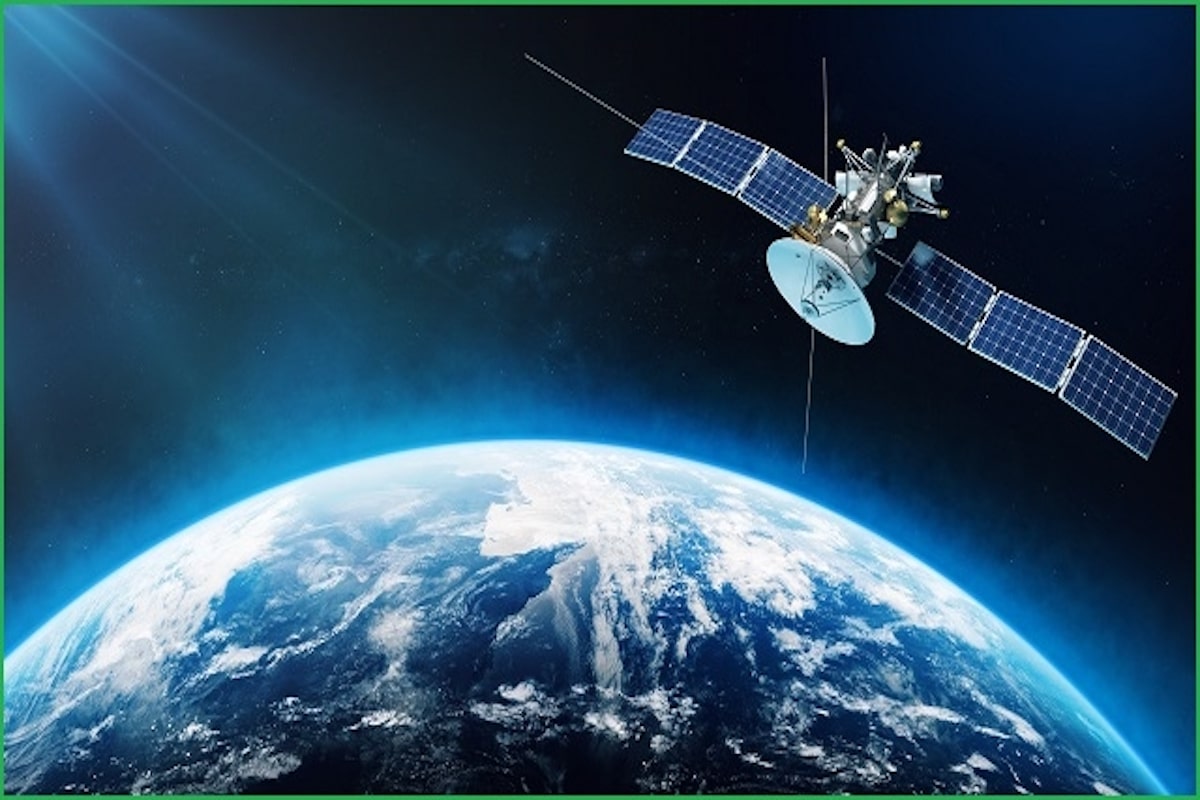
In our day-to-day lives, satellites play a crucial function. They were first employed as a covert gadget for espionage and other covert military operations. They moved into digital communication domains that have an impact on our daily lives as commercialization increased. Satellite offers a variety of services, including global television broadcasting, remote phone calls, community radio, and more. Many business models have been developed to capitalise on the promise of satellite services. Types of Satellite
Types of Satellite
Definition of a Satellite
The Sun, Planets, and Moons make up the Solar System (Natural satellites). The Sun is one of the billions of stars that make up the Milky Way Galaxy. The Milky Way is one of the billions of galaxies that make up the cosmos. However, a satellite is an object that orbits around another larger object in space. The course of this orbit could be circular or elliptical. The larger item contains all of the smaller objects that revolve around it and provides them with life, light, heat, and energy.
Natural Satellite
Natural satellites are planets that orbit the Sun, such as Earth, Jupiter, Uranus, Saturn, Neptune, and Mars. The Sun is in charge of the entire solar system. it occupies the central important position and provides all of the planets' resources. Titan, Ganymede, Callisto, Rhea, Miranda, and the Moons orbiting Planets all fall within this group of natural satellites. In the solar system, there are around 240 such moons orbiting Planets, Dwarf Planets, and other solar system entities.
Artificial Satellite
Orbiting Earth or other planets. An international space station is a habitable satellite in orbit that was developed by five collaborating space agencies between 1998 and 2011. Including NASA (USA), JAXA (Japan), ESA (Europe), Roscosmos (Russia), and CSA (Canada). And visited by 230 astronauts from 18 countries. This space station provides a platform for performing space research and evaluating potential lunar and Mars missions.
https://bit.ly/3uY7Uhi


0 Comments